
Why In-Cab Surveillance Demands Strict Data Compliance
Dashcams and in-cabin CCTV are now an important safety tool for many UK private hire drivers. A road-facing camera can help clarify an accident, challenge a fraudulent insurance claim and provide useful evidence after an incident. An inward-facing camera may also deter aggression, support safeguarding and help establish what happened during a difficult passenger journey. For drivers working late nights, carrying unfamiliar passengers or completing airport transfers under time pressure, reliable evidence can provide valuable reassurance.
Recording passengers, however, is not legally equivalent to a private motorist filming the road for personal protection. A licensed driver is operating a commercial service, and footage may identify passengers, pedestrians, other motorists and the driver. That information is personal data under the UK GDPR. Before installation, operators must consider their lawful basis, privacy impact, signage, audio settings, retention period, security arrangements and procedures for access requests. The practical objective is straightforward: protect drivers and passengers without collecting more information than is genuinely needed.
Determining Your Legal Status as a Data Controller
The first question is who decides why the camera is installed and how recordings are used. A private motorist using a dashcam solely for personal or domestic purposes may fall outside much of the UK GDPR framework. A private hire driver using cameras while carrying fare-paying passengers is in a different position. The journey forms part of a regulated commercial activity, and the person or business deciding the purpose and method of recording will generally be the data controller.
This can apply even where the business is a one-vehicle operation. The controller may be an individual driver, a private hire proprietor, an operator or a fleet company. If an operator supplies the system but the driver determines how footage is downloaded and disclosed, responsibilities should be documented rather than assumed. The ICO guidance for small businesses explains that identifiable dashcam footage is personal data and that businesses must justify recording, choose a lawful basis and consider whether a less intrusive solution could achieve the same safety aim.
Commercial operators using dashcams or CCTV will generally need to register with the Information Commissioner”s Office and pay the applicable annual data protection fee, unless a specific exemption applies. Registration is not a substitute for compliance, but it is an important part of establishing the operation properly. The controller should also record the purpose of the system, complete a proportionate privacy assessment and maintain a privacy notice explaining what is captured, why it is captured, how long it is kept and who may receive it.
- Identify the data controller and any separate processor handling storage or downloads.
- Document a lawful basis, usually based on a carefully balanced legitimate interest where appropriate.
- Register with the ICO and pay the data protection fee where required.
- Prepare a privacy notice, signage, retention policy and subject access procedure.
- Check that insurance conditions and operator policies match the actual camera configuration.
A system installed without a defensible purpose or lawful basis can create difficulties when footage is needed for an insurance claim. It may also expose the operator to complaints, an ICO investigation or a formal enforcement notice. Clear operational standards matter whether a driver works independently or manages specialist regional transfers such as an airport taxi service. The link should be reviewed and replaced with the service”s confirmed destination if required.
Navigating Local Authority Policies and Licensing Rules
UK GDPR is only part of the compliance picture. Licensing authorities can impose additional requirements on private hire vehicles, and those conditions may be stricter than the minimum technical arrangement a driver would otherwise choose. Some councils require approved in-vehicle CCTV, while others may permit an outward-facing dashcam but prohibit an ordinary consumer camera from recording the cabin. The licensing condition can determine the approved hardware, installation method, signage, audio controls, inspection process and operating hours.
Rules can also differ between neighbouring authorities. For example, Herefordshire Council requires a licence to operate a hackney carriage or private hire vehicle, and its published licensing information states that CCTV is mandatory in both vehicle types from 13 January 2025. Drivers should read the current requirements in the authority where the vehicle is licensed, not rely on advice from another council or on the camera manufacturer”s description. The official Herefordshire taxi and private hire licensing information also illustrates how licensing applications may require CCTV documentation alongside insurance, registration and compliance material.
Dual-badged drivers need particular care. A driver authorised to work across more than one licensing area may have to satisfy different equipment and presentation rules. Before buying or fitting a camera, check whether the authority requires prior approval, a specified system, an installer certificate or submission of technical details. A camera that is lawful in one area may fail a compliance test elsewhere. Local requirements must also remain consistent with broader privacy principles, so a council mandate does not automatically justify continuous audio or unlimited retention.
- Confirm which authority licenses the vehicle and which conditions apply to the current badge.
- Ask whether the system must be approved before installation or inspection.
- Check requirements for inward video, outward video, audio, GPS and event-triggered recording.
- Confirm the permitted operating period, including private use outside licensed work.
- Keep approval letters, installation records and system specifications with the vehicle documents.
The Strict Rules on Audio Recording and Passenger Privacy
Audio is usually far more intrusive than video. A camera aimed at the road may record an identifiable number plate or pedestrian incident, but a microphone can capture every conversation, medical detail, dispute and private remark inside a confined vehicle. Passengers may reasonably expect a taxi journey to involve some observation for safety, but they are unlikely to expect every conversation to be stored continuously. The ICO therefore treats audio recording as exceptional and expects it to be disabled by default unless there is a strong, specific justification.
Historical enforcement action illustrates the risk. The ICO objected to policies requiring continuous recording of conversations in taxis where the number of trouble-free journeys greatly exceeded the number of incidents. Its surveillance in vehicles guidance states that operators must assess the particular privacy risks, identify a lawful basis, provide clear notices and consider a Data Protection Impact Assessment, especially where audio may be captured.
A carefully designed panic-button arrangement may be more defensible than a live microphone operating throughout every journey. In some licensed systems, audio can be activated only after a defined safeguarding concern, threat or dispute, with a visible indication to passengers and automatic deactivation when the incident ends or the passenger leaves. Any such arrangement must follow the local authority”s technical rules and be supported by written procedures. A driver should not assume that a smartphone app or consumer dashcam microphone meets those standards.
| Recording type | Typical privacy position | Practical control |
|---|---|---|
| Road-facing video | Often justifiable for accident evidence and safety, subject to proportionality | Limit the field of view and retain footage only as needed |
| Inward-facing video | May be justified for security and safeguarding in licensed work | Use clear notices, restricted access and a documented purpose |
| Continuous interior audio | Highly intrusive and rarely proportionate | Disable by default unless exceptional justification exists |
| Incident-triggered audio | Potentially permissible in defined circumstances | Use a controlled switch, passenger warning and automatic shut-off |
Implementing Clear Signage and Compliant Camera Configurations
Passengers should know about surveillance before or as they enter the vehicle. A small sticker hidden behind a seat or placed where luggage blocks it is not a reliable privacy notice. Signage should be visible at entry points and inside the cabin, using plain language to explain that CCTV or video recording is operating. It should identify the operator or data controller, state the general purpose, and provide a contact method for privacy questions or data requests.
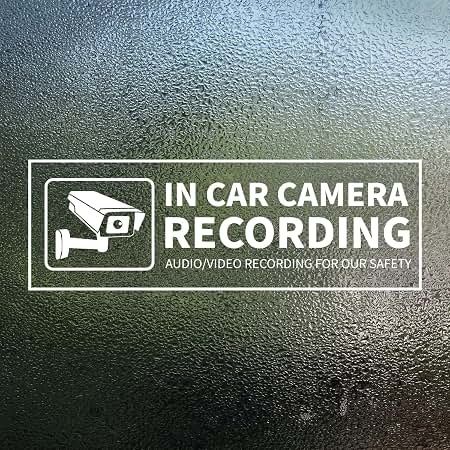
The notice should also make clear whether audio may be recorded. If audio is disabled except during an incident, that distinction should be explained accurately rather than using a vague statement that could mislead passengers. Operators should support the sign with a fuller privacy notice, available online or on request, covering the lawful basis, recipients, retention period, individual rights and complaint route. Drivers and employees should receive equivalent information through workplace policies where their images or conversations may be captured.
Installation is a safety matter as well as a privacy matter. The camera must not obstruct the driver”s view, interfere with airbags or other safety systems, weaken the vehicle structure or create a hazard for passengers. Screens should not encourage the driver to watch video while driving, and memory cards or recording units should be placed where passengers cannot remove or tamper with them. Systems should use access controls and, where available, encryption. The TfL CCTV guidelines for taxis and PHVs provide a useful technical benchmark, including secure installation, encrypted storage, controlled review and automatic overwrite after a defined maximum period.
- Place notices where passengers can see them before or immediately after entering.
- Name the controller or operator and provide a working contact method.
- State the purpose of recording and whether audio is enabled.
- Mount equipment securely without blocking visibility or affecting safety systems.
- Disable recording during private, non-working use where continuous surveillance would be excessive.
Managing Video Retention and Subject Access Requests
Retention should be driven by the purpose of the system, not by the amount of storage available. A recording kept merely in case something might happen can become excessive if it is held for several weeks without review. Around seven days may be sufficient for routine footage where no incident has been reported, while some licensing standards use a maximum of 28 days. A 28 to 31-day period should never be treated as an automatic entitlement to retain everything. The operator must document why the selected period is necessary and ensure that footage is automatically overwritten when it expires.
When an accident, complaint, crime report or insurance matter arises, the relevant clip can be preserved separately with a record of why it was retained, who accessed it and when the case concluded. Copying an entire memory card is usually unnecessary and increases the privacy risk. Export only the relevant period, protect it securely and consider whether unrelated passengers or bystanders need blurring before disclosure.
A passenger may make a Subject Access Request for footage containing their image. The operator must have a process for locating the relevant journey, verifying the requester”s identity, considering other people shown in the recording and responding within the applicable legal timeframe. Disclosure may require redaction or blurring of third parties. A request should not be ignored because the footage is stored on a camera rather than a computer.
- Record the date, approximate time, vehicle and journey details relevant to the request.
- Secure the original footage and prevent automatic overwriting while the request is assessed.
- Verify the requester”s identity and review third-party privacy implications.
- Provide an appropriate copy or explain any lawful restriction clearly.
- Delete retained material when the request, claim or investigation is complete and no further purpose remains.
Security should include strong passwords, encrypted storage where supported, restricted administrator access and a written download log. Footage should never be uploaded casually to social media or shared in driver messaging groups, even when it appears entertaining or useful. Police requests should be handled through a documented disclosure process, recording the requesting force, legal basis or reference number, material supplied and transfer method. Motor insurers may receive relevant footage for a claim, but disclosure should remain limited to what is necessary and consistent with the privacy notice.
Building Trust and Safety Through Confident Compliance
Good surveillance practice does not have to make a journey uncomfortable. Clear signage, a disabled microphone, secure systems and prompt handling of genuine incidents show passengers that safety is being managed professionally. For drivers, the same controls reduce uncertainty when a complaint, collision or safeguarding concern occurs. A dependable system is one that produces useful evidence without quietly collecting private conversations or retaining every passenger journey indefinitely.
- Check the licensing authority”s current CCTV and camera conditions.
- Identify the data controller and complete ICO registration where required.
- Document the lawful basis, purpose and privacy assessment.
- Disable continuous audio unless exceptional circumstances and local rules justify it.
- Update vehicle signs, privacy notices and driver instructions.
- Test encryption, passwords, overwrite settings and incident export procedures.
- Provide a clear route for Subject Access Requests and police or insurer disclosures.
For an existing vehicle, the next practical step is an audit rather than a replacement purchase. Check what each lens captures, whether the microphone is active, how long recordings remain available, who can download them and whether passengers can see an accurate notice. Then compare those findings with the current licensing conditions and ICO guidance, remembering that regulatory guidance may be updated as data protection law develops. A planned, transparent approach protects personal safety, supports reliable insurance evidence and helps every passenger enjoy a more secure and stress-free journey.